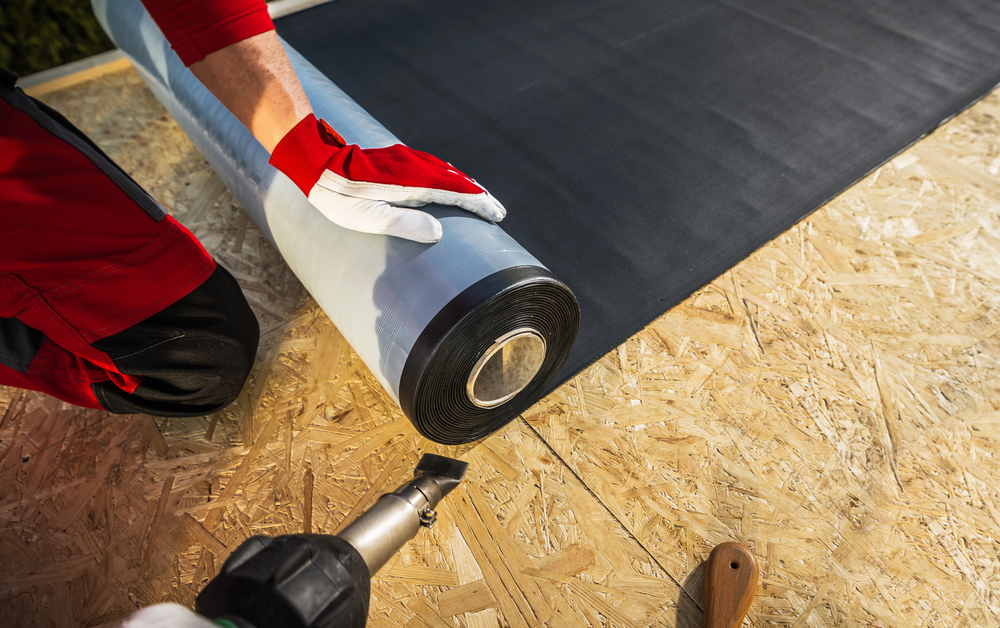
If you’re evaluating roofing choices for a flat or low-slope roof here in Eugene, OR, EPDM roofing should be something you’re looking at. This solid, single-ply option has a good track record of handling our intense desert conditions when installed correctly.
Advantages of EPDM Roofing
Stands up to Sun
You’ll appreciate how this rubber membrane holds up against the relentless Oregon conditions. Its built-in resistance to ultraviolet rays means it does not crack or degrade quickly, so it’s perfect for use in areas with high sun exposure.
Lasts 25 to 50 Years
This material has some pretty impressive durability. With proper installation and regular care, you can expect it to last between 25 and 50 years, depending on thickness and how well it is maintained. That gives you a strong return on investment for both commercial buildings and homes.
Flexible in Temperature Changes
Flexibility is a really big plus in our Mediterranean climate. The membrane on EPDM has the ability to expand and contract with day/night temperature swings without becoming brittle or splitting. This helps it stay watertight.
Fast to Build
Installation costs are often lower with EPDM than many other single-ply systems, and the lightweight rolls make the job faster for crews working on flat or low-slope roofs.
Simple to Repair
Repairs are really quite straightforward with this roofing system. You or a professional can patch any punctures or seams quickly, and the fix usually bonds well and lasts.
Good Water Resistance
Water resistance ranks high on the list of pros for this roofing system. Once it’s been sealed properly, the membrane forms a continuous barrier that can handle those monsoon rains, provided the roof has adequate drainage.
Challenges to Consider in Eugene, OR
Absorbs Rather Than Reflects Heat
In our hot climate, one drawback of this system is the material’s tendency to absorb rather than reflect heat, at least when used in its standard black form. This can raise your roof’s surface temperature and push up your building’s cooling costs.
Only Reasonably Puncture Resistant
There are stronger options out there for puncture resistance, so falling branches, dropped tools, or hail are a little more likely to create holes than with other systems. If you don’t go up on the roof much and don’t have nearby trees, this is a minimal concern, but you will want to inspect things after any hailstorm or when there’s been maintenance activity on the roof.
Needs to Be Installed Well
The seams and edges have to be done very well, because if the adhesive or fasteners are not applied exactly right, small gaps can open over time. Quality installation makes all the difference with this roofing system.
If you’re deciding what roof to put on your building, contact our team at NW Roofing Pros now. We have over two decades of hands-on experience serving the Valley, and we pride ourselves on our clear communication, quality workmanship, and problem-solving skills. Whatever your roofing issue, we can tackle it!
Connect with us


- June 2026
- April 2026
- June 2025
- May 2025
- April 2025
- March 2025
- February 2025
- January 2025
- December 2024
- November 2024
- October 2024
- September 2024
- August 2024
- June 2024
- May 2024
- April 2024
- March 2024
- February 2024
- January 2024
- December 2023
- November 2023
- October 2023
- September 2023
- August 2023
- July 2023
- June 2023
- May 2023
- April 2023
- March 2023
- February 2023
Archives
- Asphalt Shingles
- best roof materials
- Best Siding
- Blog
- Choosing A Roof
- Coburg
- Commercial Roof Damage
- Commercial Roof Problems
- commercial roofing company
- commercial roofing contractor
- Commercial Roofing Types
- Costs
- Eugene Roofing Service
- Eugene-OR
- Exterior Design Trends
- Home Trends
- Increase Home Value
- Local Aesthetic
- Local Design
- Local Roofing Contractor
- Metal Roof
- Metal Roof Installation
- Metal Roof Value
- New Roof
- New Roof Lifespan
- New Roof Options
- New Siding
- NW Roofing and Siding Pros Service
- Popular Home Colors
- popular roofing materials
- Popular Shingle Style
- Popular Siding Color
- Popular siding materials
- Popular siding types
- Roof Color 2025
- Roof Damage
- Roof Installation
- Roof Leaks
- Roof Maintenance
- Roof Repair
- Roof Replacement
- Roof Replacement Reasons
- Roof Storm Damage
- roof trends
- Siding Installation
- Siding Replacement
- sidings damage signs
- Slate Roofing
- Spring Roof Maintenance
- Springfield
- Storm Damage Roof Repair
- Synthetic Tile Roofing
- Tile Roof
- Top Shingle Color
- Tree Damage
- Uncategorized
- When To Replace a Roof
- when to replace sidings
- winter roof damage
- winter roof problems
Categories

Contractor License #210265
Services
Request an Appointment
Call 541-215-4035 or fill out the form below.